

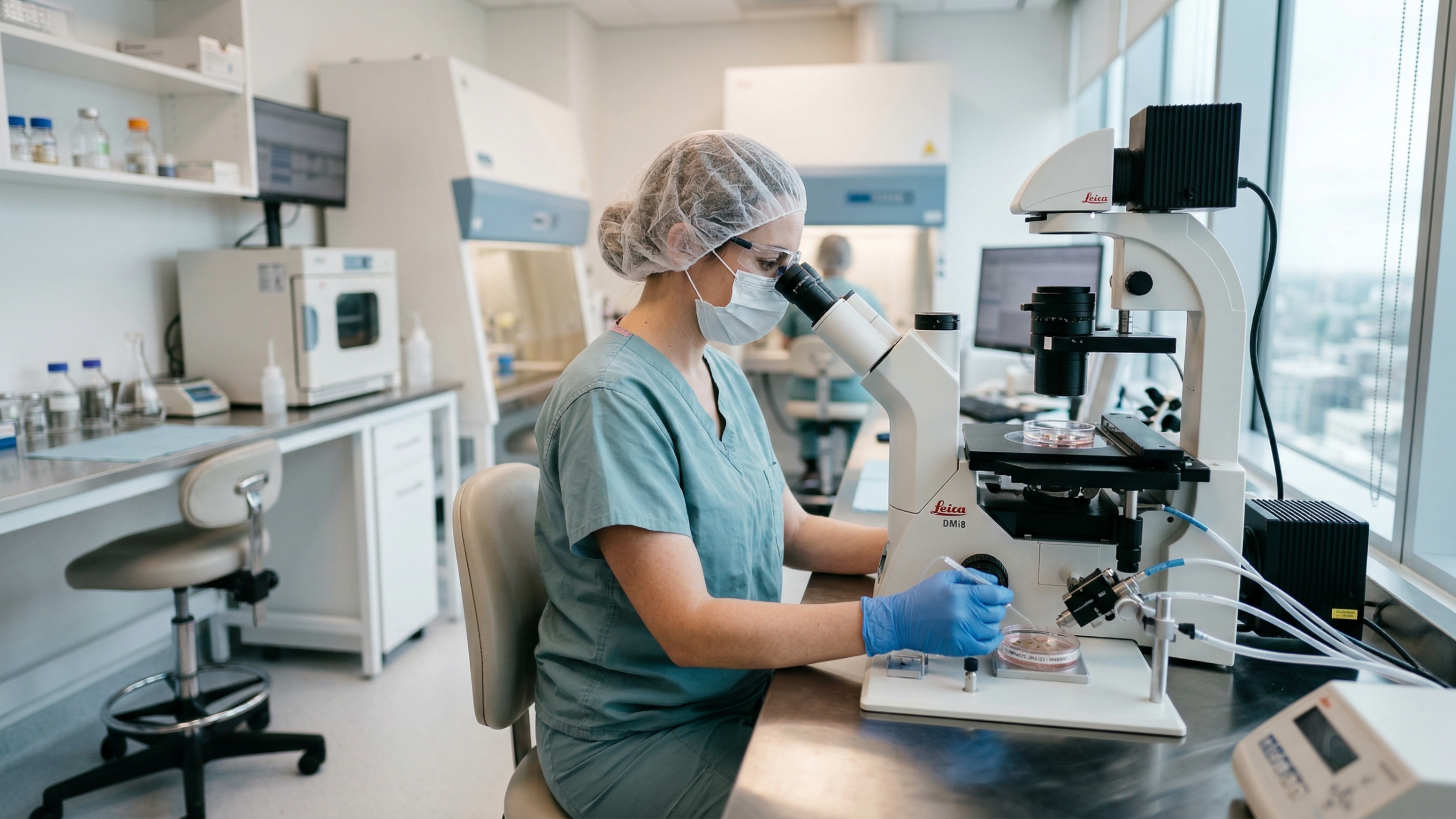
In vitro fertilization (IVF), also known as IVF-ET (In Vitro Fertization–Embryo Transfer), is a well-established assisted reproductive technology. In this process, fertilization between sperm and egg occurs in a laboratory environment. The resulting embryos are cultured and then transferred into the uterus.
IVF helps address various causes of infertility and provides a scientifically supported pathway for many families around the world to achieve their dream of having a child.
Purpose of the Technology and Who It Is For
As one of the most commonly used clinical fertility treatments, IVF is generally recommended for the following groups:
Female Factors
- Blocked or removed fallopian tubes
- Moderate to severe endometriosis that has not responded to medication or surgery
- Difficult ovulation disorders (such as polycystic ovary syndrome, PCOS)
- Decreased ovarian reserve (AMH < 1.0 ng/mL)
Male Factors
- Severe oligospermia (sperm concentration < 5 × 10⁶/mL)
- Asthenozoospermia (progressive sperm motility < 32%)
- Teratozoospermia (abnormally shaped sperm)
- Obstructive azoospermia, where sperm must be retrieved through surgical aspiration
Other Situations
- Unexplained infertility after more than three failed intrauterine insemination (IUI) attempts
- Couples who require donor eggs or donor sperm
- Recurrent pregnancy loss (three or more miscarriages)
- Couples with a family history of genetic diseases who require preimplantation genetic testing (PGT)
Key Steps of the IVF Process
A complete IVF treatment cycle typically takes about 1–2 months.
Ovarian Stimulation and Egg Retrieval
Hormonal medications are used to stimulate the ovaries so that multiple follicles develop at the same time. Ultrasound monitoring is used to track follicle growth. Once the follicles reach maturity, eggs are retrieved through a transvaginal needle aspiration procedure under intravenous sedation. The process usually takes 10–20 minutes.
Fertilization and Embryo Culture
Sperm samples are processed in the laboratory and combined with the eggs. For cases of severe male factor infertility, intracytoplasmic sperm injection (ICSI) may be used, where a single sperm is injected directly into the egg.
The fertilized eggs are then cultured in incubators that mimic the uterine environment for 3–5 days, allowing them to develop into early-stage embryos.
Embryo Transfer
One or more high-quality embryos are transferred into the uterus using a thin catheter. Single embryo transfer is generally preferred to reduce the risk of multiple pregnancies. This procedure usually takes 5–10 minutes and is performed in an outpatient setting without anesthesia.
Luteal Phase Support and Pregnancy Testing
After embryo transfer, progesterone medications are used to support the uterine lining. A blood test measuring HCG levels is typically performed 10–14 days later to confirm pregnancy.
Success Rates and Potential Risks
According to the CDC 2023 Assisted Reproductive Technology Report, the overall live birth rate for IVF in the United States is 28.7%. Success rates vary depending on several factors, with maternal age being the most important:
- Under age 35: 52.4% live birth rate per transfer
- Age 35–37: 37.8%
- Age 38–40: 23.1%
- Age 41–42: 10.9%
- Over age 43: less than 10%
In addition to age, success rates are influenced by factors such as:
- Egg and embryo quality
- Uterine conditions (e.g., endometrial thickness, uterine fibroids, intrauterine adhesions)
- The overall health of both partners
IVF treatment requires time and commitment, and it may involve some risks, including:
- Ovarian Hyperstimulation Syndrome (OHSS) – mild cases usually resolve on their own, while severe cases require medical care
- Multiple pregnancy – the risk can be significantly reduced through single embryo transfer
- Minor bleeding or infection
Conclusion
IVF is a safe and effective fertility treatment that offers a reliable reproductive option for couples who are unable to conceive naturally.
However, IVF is not a universal solution for infertility. Before starting treatment, couples should consult with a reproductive specialist and undergo a comprehensive medical evaluation—including assessments of ovarian function, sperm quality, and uterine health—to determine their suitability for IVF and understand their expected chances of success.
Find out more about female fertility from ENERBABY.